
News
AFC announced the revised dates for FIFA World Cup Qatar 2022 2nd Round qualification

FFSL released a press release to inform that AFC has announced the revised dates for FIFA World Cup 2022 Qatar 2nd round preliminary qualifications
The worldwide improvement on the Covid-19 outbreak and in new preparation of “New Normal” the AFC in consultation with FIFA, is planning reorganized the postponed matches in the FIFA international window in October and November.
As per the original schedule, Sri Lanka was planning to play against DPR Korea on 26th March 2020 as an away match, with the Korea Republic on 31st March 2020 as the Home match and with Lebanon on June 2020 as the away match
Therefore, the above matches have been rescheduled for following dates,
- 08th OCT 2020, Thursday – DPR Korea vs Sri Lanka (Away Match)
- 13th OCT 2020, Tuesday –Sri Lanka vs Korea Republic (Home Match)
- 12th NOV 2020, Thursday – Lebanon vs Sri Lanka (Away Match)
Furthermore, at present Sri Lankan team stands in the bottom of the Group H table where Turkmenistan lead the table
Points table to the date;

Sri Lankan Sports TV wishes all the very best for the Sri Lanka Men’s National Football Team on the above matches.






The Sri Lanka Volleyball Federation has ushered in a new era for the sport by appointing Greek coach Petroglou Petros as Head Coach of the National Volleyball Team. His arrival signals a strategic push to elevate Sri Lanka’s standing on the international stage and to modernize the country’s approach to training and player development.
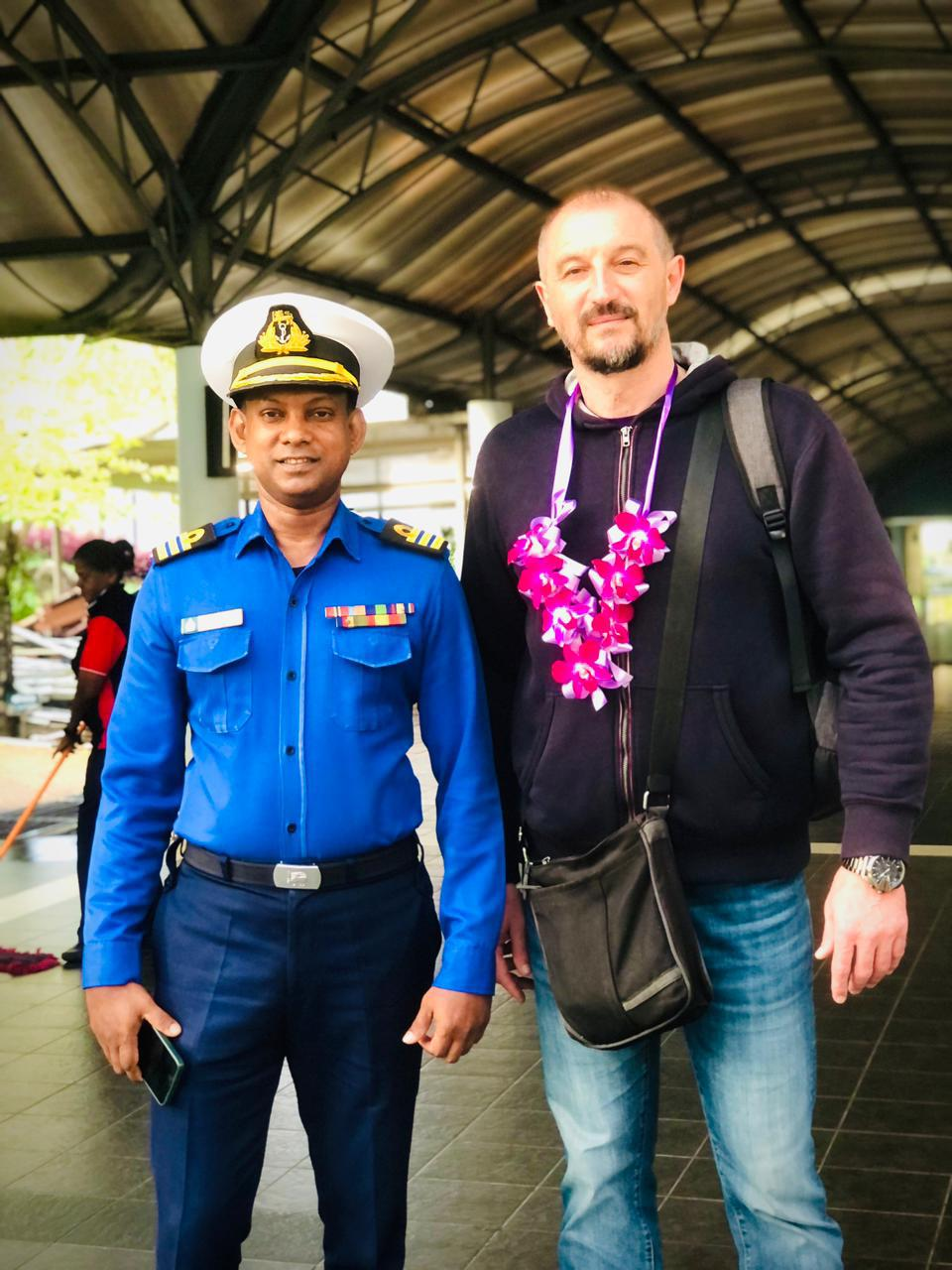
Petros, a Level 3 international coach with a wealth of experience across Europe, the Gulf region, and South Asia, touched down in Colombo yesterday. He was welcomed at Bandaranaike International Airport by Federation Vice President Commander Mahesh Kariyawasam, underscoring the importance placed on his appointment.
Known for introducing structured development systems and modern training techniques, Petros has worked extensively with both junior and senior squads. Officials believe his expertise will not only strengthen the national team’s competitiveness but also create a clear pathway for emerging talent to progress into the senior ranks.
The Federation views this appointment as a turning point, aiming to blend international coaching standards with Sri Lanka’s homegrown talent. With Petros at the helm, expectations are high that the national team will embrace a more disciplined, scientific, and globally aligned approach to the game.
Sri Lanka Cricket has announced a sweeping revamp of its High Performance Centre coaching framework, aiming to strengthen player development after the national team’s disappointing ICC Men’s T20 World Cup campaign.
The restructuring follows recommendations from the Executive Committee and marks a significant shift in the way coaching resources are deployed. Just days after Sanath Jayasuriya stepped down as Head Coach, former South African cricketer Gary Kirsten was appointed on a two-year contract beginning mid-April. Kirsten is expected to bring in his own specialists in spin, fast bowling, and fielding, leading to several reassignments within the HPC and domestic structures.
Julian Wood, hired last October as a power-hitting specialist, now serves as HPC Power Hitting Coach across all squads, including women’s cricket. Rene Ferdinands, a biomechanics expert and former national spin bowling coach, has transitioned to HPC Spin Bowling Coach with a focus on scientific aspects of bowling. Meanwhile, Jehan Mubarak, Thilina Kandamby, and Ravindra Pushpakumara have been moved into the domestic coaching structure of the National Super League, Major Clubs, and Division I schools. One of the most debated decisions is the reassignment of Avishka Gunawardena from Sri Lanka ‘A’ Head Coach to the U-19 team. Gunawardena, known for discipline and modern techniques, had overseen consistent performances with the ‘A’ team. His replacement, Ashan Priyanjan, is a recently retired cricketer with limited coaching experience, raising questions about the rationale behind the appointment.
The new framework places Gary Kirsten at the helm of the national team, with support staff to be appointed. Ashan Priyanjan takes charge of the ‘A’ team as Head Coach and Batting Coach, assisted by Chamara Silva, Anusha Samaranayake, Rumesh Ratnayake, Sachith Pathirana, Manoj Abeywickrama, and Upul Chandana. The Emerging Team will have coaches appointed on assignment basis, with Saman Jayantha, Dammika Sudarshana, Darshana Gamage, and Piyal Wijetunga handling batting, fast bowling, and spin, while fielding is managed by HPC pool coaches.
The U-19 team is now led by Avishka Gunawardena, supported by Omesh Wijesiriwardena and Dilruwn Perera, with fielding again overseen by HPC specialists. Julian Wood and Rene Ferdinands continue as HPC Power Hitting and Spin Bowling Coaches respectively, while Mubarak, Kandamby, and Pushpakumara contribute to domestic structures.
On the women’s side, Jamie Siddons remains Head Coach of the national team, assisted by Sumithra Warnakulasuriya, Dumida Perera, Chamila Gamage, Sajeewa Weerakoon, and Kaman Mapatuna. The Women’s ‘A’ team is led by Sampath Perera, with Gayan Wijekoon, Vimukthi Deshapriya, and Sajeewa Weerakoon in supporting roles. The Women’s U-19 team is headed by Mahesh Weerasinghe, with Ruvin Peiris, Chamila Gamage, Sajeewa Weerakoon, and Anton Costa completing the staff. This comprehensive restructuring signals SLC’s intent to build a stronger pipeline of talent, blending international expertise with domestic development, as the country looks ahead to future international competitions.
Hyderabad Kingsmen, one of the two debutant franchises in the upcoming Pakistan Super League (PSL) season, are exploring options to fill the void left by South African pacer Ottniel Baartman. The 11th edition of the PSL is set to run from March 26 to May 3.
According to sources, the Kingsmen have approached Sri Lankan mystery spinner Maheesh Theekshana to join their squad. His availability, however, hinges on securing a No-Objection Certificate (NOC) from Sri Lanka Cricket (SLC).
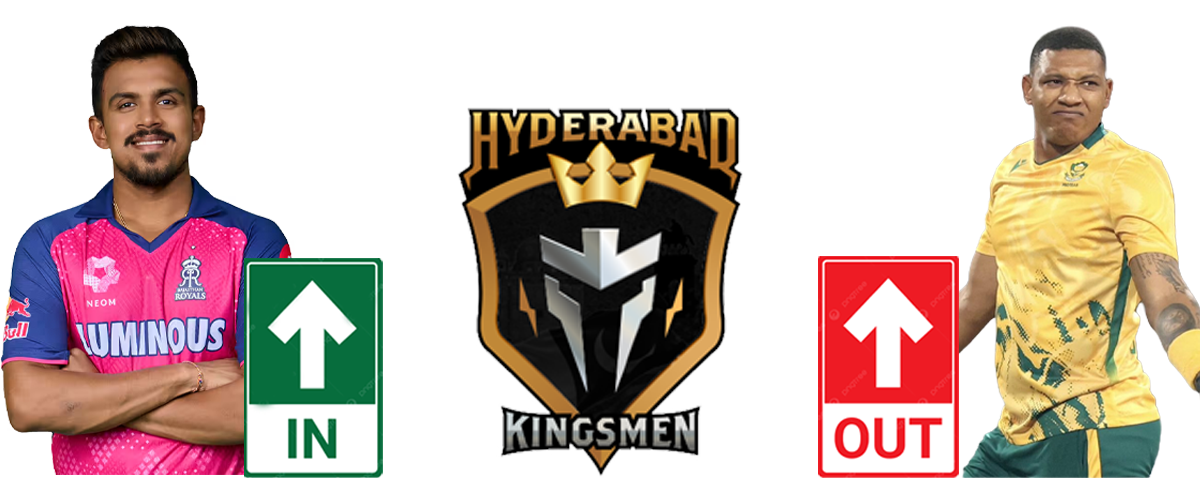
Baartman, who was picked during the historic inaugural PSL auction at Lahore’s Expo Centre on February 11 for PKR 1.1 crore, has withdrawn from the tournament. Neither the player nor the franchise has disclosed the reason for his absence.
Theekshana, meanwhile, offers proven pedigree in the shortest format. The 23-year-old has already represented Sri Lanka in 83 T20Is, bagging 82 wickets at an economy rate of 7.08. His franchise résumé is equally impressive, with stints in the IPL, SA20, ILT20, CPL, and LPL, making him a sought-after asset in global T20 leagues.
The PSL’s landmark 11th edition will feature eight teams, including new entrants Hyderabad Kingsmen and Rawalpindi, battling across 44 matches in 39 days. In a significant shift, the Pakistan Cricket Board (PCB) has streamlined the tournament logistics, announcing that all fixtures will be staged in Karachi and Lahore behind closed doors.
PCB Chairman Mohsin Naqvi confirmed the revised plans after consultations with franchise owners and Prime Minister Shehbaz Sharif, the Patron-in-Chief of the league. Initially, six cities—Multan, Peshawar, Faisalabad, Karachi, Rawalpindi, and Lahore—were under consideration as hosts, but the board opted for consolidation to ensure smooth operations.
With Baartman’s exit and Theekshana’s potential arrival, Hyderabad Kingsmen’s debut campaign promises intrigue, as the franchise looks to make its mark in Pakistan’s premier T20 competition.


Greek Coach Petros Appointed Head Coach of Sri Lanka National Volleyball Team

Coaching Restructure Signals New Era for Sri Lanka Cricket

Hyderabad Kingsmen Eye Maheesh Theekshana as Baartman’s Replacement

Sri Lanka Schools National Championship 2025: Super 8 Fixtures and Grouping

2025 Schools Rugby Season Set to Thrill Fans with Knockout and League Action

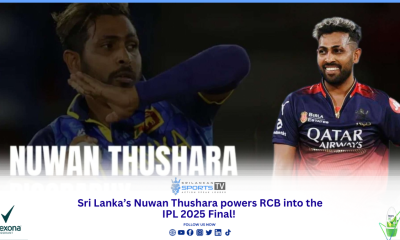
Nuwan Thushara Shines as RCB Storms into IPL 2025 Final

Sri Lanka’s Strongest Man? 💪 | Ransiru Jayathilake | Date With Sporty | Ep 7

Inside the Kandy vs CR Grand Final with Azmir Fajudeen | Date With Sporty | Ep 06 | Romanie Alvis

Date with Sporty | Safiya Yamick’s Training Secrets: A Day in the Life of a Record Holder | Ep: 5
-
 Football1 year ago
Sri Lanka Schools National Championship 2025: Super 8 Fixtures and Grouping
-
 News1 year ago
2025 Schools Rugby Season Set to Thrill Fans with Knockout and League Action
-
 Cricket10 months ago
Nuwan Thushara Shines as RCB Storms into IPL 2025 Final
-
 Live4 years ago
Live Broadcast of Syria vs Sri Lanka | AFC U23 Asian Championship Qualification
-

 Cricket1 year ago
Sri Lanka’s Greatest Cricketers: Top Batters and Bowlers of All Time
-
 News10 months ago
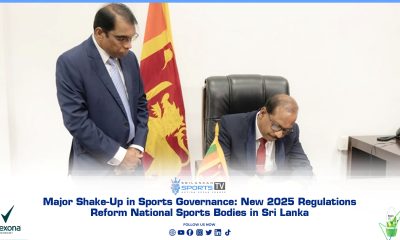
Major Shake-Up in Sports Governance: New 2025 Regulations Reform National Sports Bodies in Sri Lanka
-

 Football1 year ago
FFSL Rebrands Division-1 as ‘League-One’ with a Bold New Vision
-
 Football11 months ago
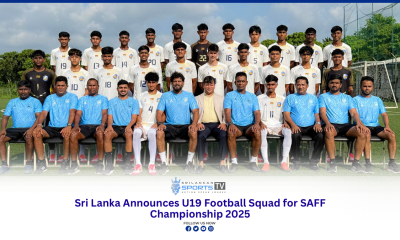
Sri Lanka Announces U19 Football Squad for SAFF Championship 2025