
News
Major Shake-Up in Sports Governance: New 2025 Regulations Reform National Sports Bodies in Sri Lanka

In a significant move to overhaul the country’s sports governance, the Ministry of Youth Affairs and Sports has officially replaced the National Sports Associations Regulations No. 01 of 2024 with a stricter and more transparent version titled National Sports Associations Regulations No. 01 of 2025, gazetted on May 21.

The 2025 regulations promise enhanced transparency, accountability, and integrity in Sri Lanka’s sports administration. Here’s a breakdown of the most notable changes:
1. Probation Period for New Federations
Under the 2025 regulations:
- New sports associations will be registered on a 2-year probationary basis, only gaining full registration if they show activity in at least 7 districts.
- The 2024 rules allowed immediate full registration with just documentation and a Rs. 50,000 fee. The new regulations reduce the fee to Rs. 30,000, but require a presence in at least 3 districts at registration, with expansion to 7 for permanent status.
2. New Eligibility Criteria for Executive Committees
- Professional Qualifications Introduced: For key posts like Treasurer, candidates must now be Chartered Accountants or hold degrees in management or commerce.
- For other executive roles, candidates must have either represented Sri Lanka or placed at recognized national-level events or have 15 years in relevant professions (law, medicine, sports science, engineering, accounting).
This marks a shift from the 2024 rules, which mainly emphasized finance-related qualifications but lacked performance or academic requirements.
3. Term Limits Tightened
- Previously, individuals could serve up to 16 years (with 8 years max for roles like President/Secretary). Now, the limit is 12 years across all roles—whether continuously or intermittently.
- Importantly, interim committee service is now counted toward this limit, preventing career-long occupation of executive positions.
4. Disqualification Criteria Expanded
The 2025 law significantly strengthens the integrity standards for sports administrators by expanding the disqualification criteria. Key additions and clarifications include:
- Convictions under Amended Sports Law or Prevention of Offences Relating to Sports Act: Anyone found guilty under these updated laws is automatically disqualified.
- Misconduct Proven by Sports Authorities: Any individual found guilty of financial misconduct, corruption, or disciplinary offences by a formal committee appointed by the Minister, Ministry of Sports, or Department of Sports Development will be disqualified.
- Criminal Convictions: Any person convicted of money laundering, bribery, or corruption and sentenced to 6 months or more.
- Media Conflicts: Former journalists, media owners, or key shareholders are barred if involved within the past two years.
- Relatives of National Athletes: Spouses, parents, and siblings of national pool athletes are disqualified.
- Involvement in Betting, Match-Fixing, or Human Trafficking
- Failure to Return from International Duty: Individuals who absconded while representing Sri Lanka are barred.
- Politicians Disqualified: Current MPs, Provincial Council members, and Local Government representatives are ineligible.
- This overhaul reflects a zero-tolerance policy on corruption, conflict of interest, and unprofessional conduct in Sri Lankan sports governance.
The 2024 law also had disqualifications, but 2025’s list is clearer, stricter, and more enforceable.
5. Stricter Election & Voting Rules
- Voting rights are tied to active participation in national events. Associations failing to attend three consecutive meetings lose voting privileges.
- All AGM documentation must be sent 14 days in advance to all affiliates (reduced from 21 days in 2024).
- New members cannot vote in the AGM where they were admitted—ensuring stability.
6. More Transparency in Selections
- All selection trials and criteria must be published 28 days in advance and informed to athletes 14 days prior.
- Final selection results must be published online.
- Trials conducted at the personal discretion of officials or coaches can be invalidated.
7. New Emphasis on Local Development
- National Associations are now mandated to:
- Promote the sport in every province
- Maintain monthly meetings (with school reps present)
- Submit a 5-year strategic plan
- Develop regional, district and provincial structures in all GN divisions
This is a substantial shift from the previous framework which focused more on organizational formalities than grassroots development.
8. International Participation Regulated
- Only athletes approved by the Sports Minister after going through the selection, fitness, and medical vetting can use “Sri Lanka” or national colours abroad.
- Unauthorized representation may result in a 10-year suspension.
Editorial Insight
The 2025 regulations represent a paradigm shift—from a loosely monitored setup to a system that rewards merit, ensures compliance, and is prepared to discipline violators. It’s the boldest attempt in recent years to clean up Sri Lanka’s sports governance, aligning it more closely with international standards and public expectations.



24 Schools, 15 Venues and Three National Trophies as Ball Blaster Enters Its Third Year
COLOMBO — Ball Blaster, Sri Lanka’s premier school football tournament, is set to return in 2026 with its biggest edition yet, organized by Aasgard Sports (Private) Limited in collaboration with the Sri Lanka Schools Football Association and the Ministry of Education.
Now entering its third year, Ball Blaster has grown from 2023 with 20 schools into one of the country’s largest youth football events. The 2025 edition featured 16 schools competing across four groups, drawing national broadcast attention through Sri Lankan Sports TV and PEO TV. For 2026, the tournament expands significantly, with 24 schools set to compete across 15 venues nationwide, in a season spanning six weeks and 84 matches.
A NEW FORMAT: THREE TROPHIES, THREE CHAMPIONS
The standout feature of Ball Blaster 2026 is a new three-tier trophy format. Schools will be drawn into four groups of six, playing a round-robin group stage before advancing into one of three parallel championships based on their group finish: the Cup Trophy for group winners, the Bowl Trophy for runners-up, and the Plate Trophy for second runners-up. The format ensures every participating school remains in contention for a national title deep into the tournament.
All three championships will reach their conclusion on the same finals weekend, with third-place playoffs and grand finals for the Cup, Bowl and Plate trophies all being played at Sugathadasa Stadium in Colombo.
“Ball Blaster has always been about giving young footballers a stage,” said a spokesperson for Aasgard Sports. “This year, we’re expanding that stage to every corner of the island, and making sure every school that takes part has something real to play for, right to the final whistle.”
BUILDING ON A STRONG 2025
Ball Blaster’s growth has been underpinned by strong sponsor support. The 2025 edition was backed by Lifebuoy as Title Sponsor, alongside Lemonade as Refreshing Partner and Sky Market Travels as Travelling Partner. Organizers say conversations are already underway with returning and new sponsors ahead of the 2026 season, as the tournament’s expanded scale — nationwide venues, a longer season and three separate finals — offers significantly greater visibility for partners.
BROADCAST AND COVERAGE
As in previous years, Ball Blaster 2026 will be broadcast live via Sri Lankan Sports TV and PEO Sports, with matches also available on YouTube and across Sri Lankan Sports TV’s digital platforms.
For sponsorship and partnership enquiries, contact: Pasindu Mihiranga Sri Lankan Sports TV | Aasgard Sports (Private) Limited 0726 85 18 18 marketing@srilankansportstv.com
www.srilankansportstv.com
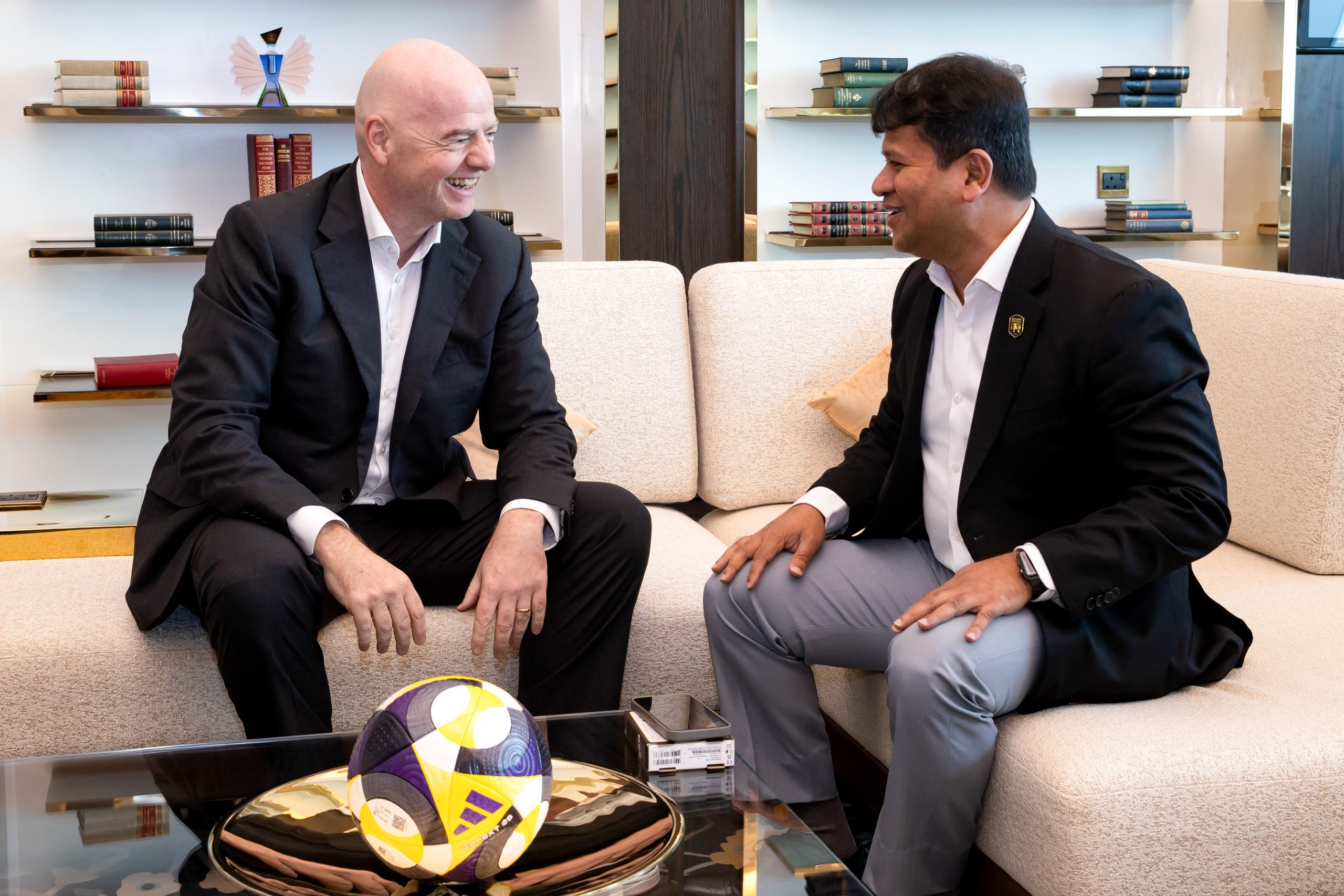
Football Federation of Sri Lanka (FFSL) President Jaswar Umar has described the inaugural FIFA Series in Colombo as a major milestone for the country’s football development, saying the tournament has given Sri Lanka renewed confidence and a stronger connection with the international game.
Umar, who has been involved in efforts to strengthen Sri Lankan football administration and development, said hosting the tournament demonstrated that developing football nations could compete on the global stage when given meaningful opportunities.
The FIFA Series, held in Colombo in March 2024, brought Sri Lanka together with Bhutan, Papua New Guinea and the Central African Republic. The four participating nations represented three different confederations, giving Sri Lanka an unusual opportunity to face teams with different playing styles.
Sri Lanka completed its campaign unbeaten, drawing 0-0 against Papua New Guinea and defeating Bhutan 2-0. Umar said the matches provided valuable experience for the national team and helped players adapt to different forms of international competition.
He stressed that the benefits extended beyond the football field. Sri Lankan officials involved in administration, technical operations, media, medical services and event management gained practical experience in organising matches to international standards.
The Racecourse Ground also received an important upgrade through assistance from FIFA’s Forward Programme. The renovation enabled the historic Colombo venue to host international football and created improved facilities for future events.
Umar said one of the most important achievements was bringing international football closer to Sri Lankan supporters. Young fans were able to watch national players compete against foreign opposition in their own city, helping to inspire a new generation.
He thanked FIFA and its President Gianni Infantino for supporting developing football nations.
According to Umar, the FIFA Series has left Sri Lanka with more than match results. It has provided international experience, stronger administrative capabilities, improved infrastructure and, most importantly, renewed belief in the future of Sri Lankan football.
Imesha Dulani stole the spotlight with a sensational unbeaten century as Sri Lanka Women chased down a formidable target of 177 to register a convincing six-wicket victory over Pakistan Women in the first T20I worked off at Dambulla international Stadium.
Pakistan looked set for victory after posting a competitive 176 for 7 in their 20 overs. Captain Muneeba Ali gave the innings early momentum with a fluent 42 off 24 balls, while Shawaal Zulfiqar anchored the innings superbly with a brilliant 63 from 41 deliveries, striking 10 fours and a six. Eman Naseer added a valuable 21, while Ayesha Zafar and Saira Jabeen played aggressive cameos in the closing overs to push Pakistan to an above-par total.
Sri Lanka’s bowlers shared the wickets, with Kavisha Dilhari leading the way with two dismissals. Chamudi Praboda, Sugandika Kumari and Kawya Kavindi chipped in with one wicket apiece, while disciplined fielding produced two crucial run-outs.
The chase belonged entirely to Dulani, who delivered the innings of the match. Displaying confidence, composure and a wide range of attacking strokes, she remained unbeaten on 101 from just 64 balls, smashing 17 boundaries and a six. Her innings combined elegance with controlled aggression, ensuring Sri Lanka stayed ahead of the required rate throughout the chase.
Captain Chamari Athapaththu provided the ideal platform with a sparkling 39 off 22 balls, adding 78 for the opening wicket before Nashra Sandhu broke the partnership. Although Sri Lanka lost wickets at regular intervals in the middle overs, Dulani remained firmly in control, rotating the strike effectively before accelerating when it mattered most.
Kavisha Dilhari contributed 11 valuable runs, while Nilakshika Silva remained unbeaten on nine as Sri Lanka reached 177 for 4 in 19 overs, sealing victory with six balls to spare.
Pakistan spinner Nashra Sandhu finished with two wickets, but she could do little to halt Dulani’s memorable knock.

BALL BLASTER 2026: SRI LANKA’S BIGGEST SCHOOL FOOTBALL TOURNAMENT RETURNS BIGGER THAN EVER

Jaswar Umar Hails FIFA Series as Turning Point for Sri Lankan Football

Dulani’s sparkling century powers Sri Lanka to thrilling victory

Sri Lanka Schools National Championship 2025: Super 8 Fixtures and Grouping

Sri Lanka’s Greatest Cricketers: Top Batters and Bowlers of All Time

2025 Schools Rugby Season Set to Thrill Fans with Knockout and League Action

FIFA World Cup 2026 Analysis | Group Stage & Round of 32 Predictions | Rexona Road to Glory EP 01

The Future of Sri Lankan Rugby | Pavithra Fernando Interview | Game Plan | Episode 1 Part II

RUGBY PRESIDENT PAVITHRA FERNANDO SPEAKS OUT! | Game Plan | Episode 01
-
 Football2 years ago
Sri Lanka Schools National Championship 2025: Super 8 Fixtures and Grouping
-
 Cricket2 years ago
Sri Lanka’s Greatest Cricketers: Top Batters and Bowlers of All Time
-
 News2 years ago
2025 Schools Rugby Season Set to Thrill Fans with Knockout and League Action
-

 Cricket1 year ago
Nuwan Thushara Shines as RCB Storms into IPL 2025 Final
-
 Live5 years ago
Live Broadcast of Syria vs Sri Lanka | AFC U23 Asian Championship Qualification
-

 Football2 years ago
FFSL Rebrands Division-1 as ‘League-One’ with a Bold New Vision
-

 Cricket6 months ago
Chamindu Wickramasinghe’s bowling action under scrutiny?
-
 Football1 year ago
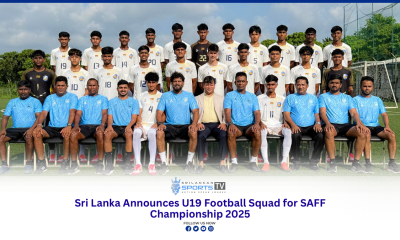
Sri Lanka Announces U19 Football Squad for SAFF Championship 2025
You must be logged in to post a comment Login