
Cricket
Charith Asalanka Stars in Sri Lanka’s Dramatic ODI Victory Over Australia

Sri Lanka secured a stunning 49-run win over Australia in the first ODI of their series, defending a modest total of 214 runs—the second-lowest total ever defended against Australia in men’s ODIs since 2005. Charith Asalanka played a match-winning role, scoring a brilliant 127 runs off 126 balls, guiding Sri Lanka to an unexpected victory in Colombo.
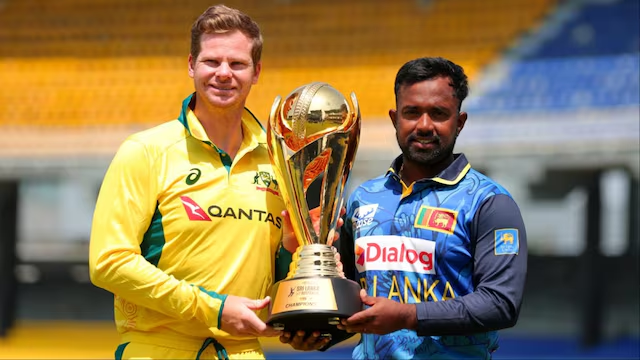
Asalanka’s Heroic Century Leads Sri Lanka
After Sri Lanka was reduced to 135 for 8, Asalanka took charge, delivering a match-defining knock. He formed a crucial 79-run partnership with Eshan Malinga for the ninth wicket, with Malinga contributing just 1 run off 26 balls. Asalanka’s 127 runs accounted for over 59% of Sri Lanka’s total runs, marking one of the highest individual contributions in Sri Lanka’s ODI history.
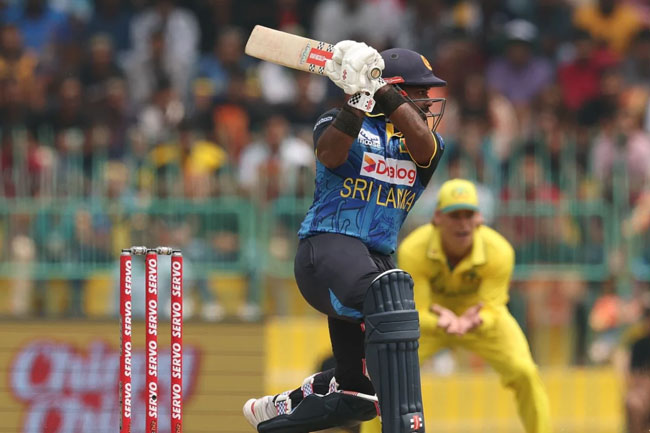
Australia’s Struggles in the Chase
Australia, missing key players such as Travis Head, Josh Inglis, and Glenn Maxwell, started their chase poorly, losing four wickets in the first ten overs. Matt Short was dismissed for a duck, and Jake Fraser-McGurk fell cheaply. Despite Alex Carey and Marnus Labuschagne attempting to rebuild the innings, Australia collapsed to 85 for 6, giving Sri Lanka a strong grip on the match.
Sri Lanka’s Bowlers Dominate
Sri Lanka’s bowlers, led by Maheesh Theekshana (4/40), were exceptional in dismantling Australia’s top order. Asitha Fernando and Dunith Wellalage provided crucial breakthroughs, ensuring Australia never found their rhythm. Aaron Hardie and Sean Abbott showed resistance, but their efforts weren’t enough to chase down the target.

Asalanka’s Contribution in Context
Asalanka’s 127 runs were not only the second-highest score by a Sri Lankan batter against Australia in ODIs but also marked his fourth career century in the format. His knock was a blend of patience and aggression, with aggressive shots coming at crucial moments to shift the momentum in Sri Lanka’s favor.
Australia’s Seam Attack
Australia’s seam-heavy attack, led by Abbott, Hardie, and Spencer Johnson, initially troubled Sri Lanka’s top order, especially in the humid conditions of Colombo. However, Asalanka’s dominance with the bat turned the match in Sri Lanka’s favor, despite strong spells from the Australian bowlers.
Sri Lanka’s Resilience
Sri Lanka’s 214 runs were initially thought to be insufficient, but a disciplined bowling performance ensured they defended the total successfully. Asalanka’s leadership and resilience with the bat, coupled with the bowlers’ sharp performance, guided Sri Lanka to an unexpected ODI win over a weakened Australian side.
Key Highlights:
- Charith Asalanka scores a match-winning 127 runs.
- Sri Lanka defends 214 runs to beat Australia by 49 runs.
- Maheesh Theekshana claims 4 wickets, while Asitha Fernando and Dunith Wellalage also contribute crucial breakthroughs.
- Australia crumbles to 165 all out, with Aaron Hardie and Sean Abbott making late resistance.
Sri Lanka’s 49-run victory over Australia is a significant achievement, continuing their strong ODI form and showing their fighting spirit despite not qualifying for the Champions Trophy. This victory marks Sri Lanka’s 8th win in their last 12 ODIs, showcasing a promising future for the team.











Imesha Dulani stole the spotlight with a sensational unbeaten century as Sri Lanka Women chased down a formidable target of 177 to register a convincing six-wicket victory over Pakistan Women in the first T20I worked off at Dambulla international Stadium.
Pakistan looked set for victory after posting a competitive 176 for 7 in their 20 overs. Captain Muneeba Ali gave the innings early momentum with a fluent 42 off 24 balls, while Shawaal Zulfiqar anchored the innings superbly with a brilliant 63 from 41 deliveries, striking 10 fours and a six. Eman Naseer added a valuable 21, while Ayesha Zafar and Saira Jabeen played aggressive cameos in the closing overs to push Pakistan to an above-par total.
Sri Lanka’s bowlers shared the wickets, with Kavisha Dilhari leading the way with two dismissals. Chamudi Praboda, Sugandika Kumari and Kawya Kavindi chipped in with one wicket apiece, while disciplined fielding produced two crucial run-outs.
The chase belonged entirely to Dulani, who delivered the innings of the match. Displaying confidence, composure and a wide range of attacking strokes, she remained unbeaten on 101 from just 64 balls, smashing 17 boundaries and a six. Her innings combined elegance with controlled aggression, ensuring Sri Lanka stayed ahead of the required rate throughout the chase.
Captain Chamari Athapaththu provided the ideal platform with a sparkling 39 off 22 balls, adding 78 for the opening wicket before Nashra Sandhu broke the partnership. Although Sri Lanka lost wickets at regular intervals in the middle overs, Dulani remained firmly in control, rotating the strike effectively before accelerating when it mattered most.
Kavisha Dilhari contributed 11 valuable runs, while Nilakshika Silva remained unbeaten on nine as Sri Lanka reached 177 for 4 in 19 overs, sealing victory with six balls to spare.
Pakistan spinner Nashra Sandhu finished with two wickets, but she could do little to halt Dulani’s memorable knock.
Pakistan Women produced a composed batting performance led by Gull Feroza and Sidra Amin to register a five-wicket victory over Sri Lanka Women in the opening ODI of their tour after successfully chasing 211 with seven overs to spare.
After opting to bat, Sri Lanka struggled to build substantial partnerships despite several batters making useful contributions. Opener Vishmi Gunaratne gave the hosts a positive start with 28 off 38 deliveries, striking four boundaries before becoming the first of three victims for left-arm spinner Nashra Sandhu.
Captain Chamari Athapaththu looked set for a bigger score, compiling an elegant 46 from 67 balls with six fours. She added 53 runs with Hasini Perera for the second wicket, but Nashra’s timely breakthrough halted Sri Lanka’s momentum.
Perera contributed a patient 35 while Kavisha Dilhari added another valuable 35 in the middle order. Nilakshika Silva remained unbeaten on 46 from 50 deliveries, ensuring Sri Lanka batted out their full quota of 50 overs to post 210 for nine.
Pakistan’s disciplined bowling attack shared the workload effectively. Nashra Sandhu finished with impressive figures of 3 for 42, while Tasmia Rubab claimed 2 for 34. Umm-e-Hani, Syeda Aroob Shah and captain Fatima Sana chipped in with a wicket apiece to keep the scoring under control.
In reply, Pakistan laid the foundation through Gull Feroza, who produced a fluent 78 off 77 balls, laced with 11 boundaries. She dominated the opening stand before being trapped leg before wicket by Kavisha Dilhari after steering her side into a commanding position.
Experienced batter Sidra Amin anchored the chase with a measured 57 from 94 deliveries, rotating the strike effectively while building partnerships that kept Pakistan comfortably ahead of the required rate. Ayesha Zafar then finished the job with an unbeaten 27, while Najiha Alvi contributed a useful 13.
Sri Lanka’s bowlers found occasional breakthroughs, with Dilhari returning 2 for 37, while Inoka Ranaweera, Chamari Athapaththu and Nimasha Meepage claimed one wicket each. However, the modest target never placed Pakistan under sustained pressure as they reached 211 for five in 43 overs to take an early lead in the series.
Brief Scores:
Sri Lanka Women 210/9 (50 overs) – Chamari Athapaththu 46, Nilakshika Silva 46; Nashra Sandhu 3/42, Tasmia Rubab 2/34. Pakistan Women 211/5 (43 overs) – Gull Feroza 78, Sidra Amin 57, Ayesha Zafar 27; Kavisha Dilhari 2/37.
A breathtaking assault from teenage sensation Vaibhav Sooryavanshi powered India ‘A’ to a commanding 66-run victory over Sri Lanka ‘A’ in the final of the Tri-Series 2026, as the visitors lifted the title in emphatic fashion.
After being asked to bat, India ‘A’ piled up a daunting 377 for 9 in their 50 overs, thanks largely to Sooryavanshi’s explosive 94 off just 29 balls. The left-hander unleashed a stunning display of power-hitting, smashing 10 fours and eight sixes at a remarkable strike rate of 324.13.
Together with Priyansh Arya, who made a brisk 39, he put on 132 runs for the opening wicket in less than nine overs, leaving the Sri Lankan bowlers reeling.
Although Sooryavanshi fell agonisingly short of a century, India maintained the momentum through Ruturaj Gaikwad (40) and captain Tilak Varma, who anchored the middle overs with a well-compiled 67. Kumar Kushagra contributed 36, while Anukul Roy provided a late flourish with an unbeaten 39 from just 15 deliveries, including four sixes.
For Sri Lanka, Wanuja Sahan was the most economical bowler and claimed two wickets, while Ravindu Fernando and Kugathas Mathulan also picked up two scalps each.
Faced with a formidable target, Sri Lanka ‘A’ launched a spirited chase but were eventually bowled out for 311 in 47.1 overs. Sadeera Samarawickrama led the resistance with an attractive 52 off 44 balls, while Wanuja Sahan produced a fighting 62. Captain Sahan Arachchige chipped in with 38 and Vijayakanth Viyaskanth added 39, but the required rate continued to climb.
India’s bowlers struck at regular intervals, with Yash Thakur and Vipraj Nigam claiming three wickets apiece. Anukul Roy supported well with two wickets as Sri Lanka’s challenge faded in the closing stages.


BALL BLASTER 2026: SRI LANKA’S BIGGEST SCHOOL FOOTBALL TOURNAMENT RETURNS BIGGER THAN EVER

Jaswar Umar Hails FIFA Series as Turning Point for Sri Lankan Football

Dulani’s sparkling century powers Sri Lanka to thrilling victory

Sri Lanka Schools National Championship 2025: Super 8 Fixtures and Grouping

Sri Lanka’s Greatest Cricketers: Top Batters and Bowlers of All Time

2025 Schools Rugby Season Set to Thrill Fans with Knockout and League Action

FIFA World Cup 2026 Analysis | Group Stage & Round of 32 Predictions | Rexona Road to Glory EP 01

The Future of Sri Lankan Rugby | Pavithra Fernando Interview | Game Plan | Episode 1 Part II

RUGBY PRESIDENT PAVITHRA FERNANDO SPEAKS OUT! | Game Plan | Episode 01
-
 Football2 years ago
Sri Lanka Schools National Championship 2025: Super 8 Fixtures and Grouping
-
 Cricket2 years ago
Sri Lanka’s Greatest Cricketers: Top Batters and Bowlers of All Time
-
 News2 years ago
2025 Schools Rugby Season Set to Thrill Fans with Knockout and League Action
-

 Cricket1 year ago
Nuwan Thushara Shines as RCB Storms into IPL 2025 Final
-
 Live5 years ago
Live Broadcast of Syria vs Sri Lanka | AFC U23 Asian Championship Qualification
-

 News1 year ago
Major Shake-Up in Sports Governance: New 2025 Regulations Reform National Sports Bodies in Sri Lanka
-

 Football2 years ago
FFSL Rebrands Division-1 as ‘League-One’ with a Bold New Vision
-

 Cricket6 months ago
Chamindu Wickramasinghe’s bowling action under scrutiny?
You must be logged in to post a comment Login