
News
How the Global Sports Economy Works — Lessons from the World and India, and What Sri Lanka Can Do Next

Sport has evolved far beyond competition and entertainment. Across the world, it has become a multi-billion-dollar economic engine, generating employment, infrastructure development, tourism, media revenue, and sustainable athlete livelihoods. From Europe to Asia, nations that have invested strategically in sport now reap economic and social dividends. Sri Lanka, standing at a critical crossroads, has much to learn from these models.
The Global Sports Economy: More Than Just Matches
Globally, the sports industry is valued at over USD 500 billion, encompassing professional leagues, broadcasting rights, sponsorships, sports tourism, infrastructure, merchandise, sports science, and digital platforms.
Countries such as the United States, United Kingdom, China, and Australia treat sport as an industry rather than a recreational activity. Their success rests on four pillars:
- Professional leagues and structured competitions
- Strong private-sector partnerships
- Athlete-centric commercial ecosystems
- Policy support and long-term planning
Athletes in these systems benefit not only from prize money but also from contracts, endorsements, pensions, insurance, post-retirement opportunities, and education pathways, ensuring sport is a viable career rather than a short-term pursuit.
India’s Sports Economy: A Regional Case Study
India’s transformation over the past decade provides one of the most relevant case studies for Sri Lanka. Once heavily reliant on cricket alone, India has built a diversified sports economy through structured leagues and government–private collaboration.
The introduction of the Indian Premier League (IPL) revolutionised cricket economics, creating billions in revenue while supporting players, coaches, analysts, broadcasters, marketers, and venue operators. This model was replicated across other sports through leagues such as:
- Indian Super League (Football)
- Pro Kabaddi League
- Premier Badminton League
- Ultimate Kho Kho
- Women’s Premier League (Cricket)
These leagues did more than entertain. They created year-round employment, improved grassroots scouting, professionalised coaching, and gave young athletes financial security and visibility.
Government initiatives like Khelo India and the Target Olympic Podium Scheme (TOPS) complemented league structures by funding athlete training, sports science, nutrition, and international exposure. Importantly, athletes were treated as economic contributors, not beneficiaries of charity.
How Athletes Benefit in a Sports Economy
In mature sports economies, athletes benefit through:
- Central contracts and league salaries
- Sponsorship and brand endorsements
- Medical insurance and injury cover
- Access to sports science, analytics, and psychology
- Education and dual-career support
- Post-retirement roles in coaching, media, administration, and entrepreneurship
Sport becomes a sustainable profession, reducing dropout rates and improving performance standards.
Where Sri Lanka Stands Today
Sri Lanka possesses immense sporting talent across cricket, football, athletics, rugby, volleyball, combat sports, and school sports. However, the sports ecosystem remains fragmented, with limited commercial pathways for athletes outside elite cricket.
Key challenges include:
- Lack of structured domestic leagues
- Weak private-sector investment
- Overdependence on government funding
- Inadequate athlete welfare systems
- Underutilisation of sports infrastructure
- Limited sports tourism and event hosting
Most athletes face uncertainty beyond school or national-level participation, leading many to abandon sport prematurely.
What Sri Lanka Can Do to Build a Sports Economy
Sri Lanka does not need to reinvent the wheel. It needs policy alignment, institutional reform, and commercial courage.
1. Develop Tiered Professional Leagues
Introduce sustainable league structures in football, volleyball, rugby, athletics meets, women’s sports, and regional cricket. Even semi-professional leagues can stimulate local economies.
2. Encourage Private Investment
Create tax incentives, sponsorship protections, and long-term lease frameworks to attract corporate partners into sports ownership, marketing, and infrastructure.
3. Strengthen School-to-Club Pathways
Formalise school sports pipelines into club and league systems, ensuring talent progression and retention.
4. Protect Athletes as Professionals
Introduce minimum contracts, medical insurance, injury compensation, and retirement transition programmes.
5. Activate Sports Tourism
Leverage Sri Lanka’s geography to host regional tournaments, training camps, beach sports events, and international friendlies, boosting hospitality and local economies.
6. Modernise Governance
Ensure transparent administration, professional venue management, and data-driven decision-making to build investor confidence.
A Strategic Opportunity
Sri Lanka stands at a moment where sport can become an economic pillar, not merely a medal-driven activity. With regional competition intensifying and youth participation declining, the need to professionalise sport has never been more urgent.
Building a sports economy is not just about revenue — it is about nation-building, youth employment, health, unity, and global relevance. The global and Indian experiences prove that with vision and structure, sport can power both economic growth and athletic excellence.
For Sri Lanka, the question is no longer whether sport can drive the economy — but whether the country is ready to let it.
By B Aravinth










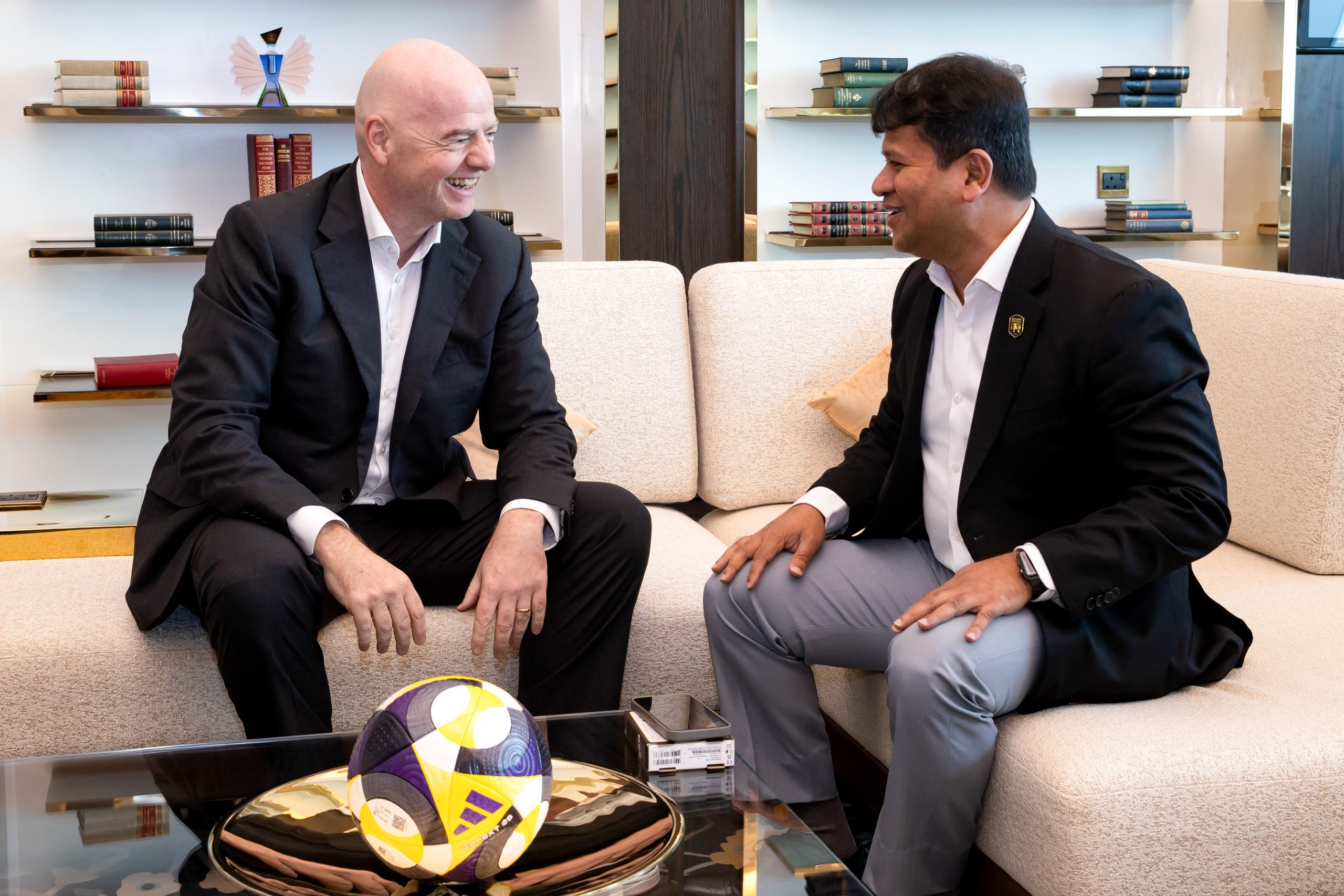
Football Federation of Sri Lanka (FFSL) President Jaswar Umar has described the inaugural FIFA Series in Colombo as a major milestone for the country’s football development, saying the tournament has given Sri Lanka renewed confidence and a stronger connection with the international game.
Umar, who has been involved in efforts to strengthen Sri Lankan football administration and development, said hosting the tournament demonstrated that developing football nations could compete on the global stage when given meaningful opportunities.
The FIFA Series, held in Colombo in March 2024, brought Sri Lanka together with Bhutan, Papua New Guinea and the Central African Republic. The four participating nations represented three different confederations, giving Sri Lanka an unusual opportunity to face teams with different playing styles.
Sri Lanka completed its campaign unbeaten, drawing 0-0 against Papua New Guinea and defeating Bhutan 2-0. Umar said the matches provided valuable experience for the national team and helped players adapt to different forms of international competition.
He stressed that the benefits extended beyond the football field. Sri Lankan officials involved in administration, technical operations, media, medical services and event management gained practical experience in organising matches to international standards.
The Racecourse Ground also received an important upgrade through assistance from FIFA’s Forward Programme. The renovation enabled the historic Colombo venue to host international football and created improved facilities for future events.
Umar said one of the most important achievements was bringing international football closer to Sri Lankan supporters. Young fans were able to watch national players compete against foreign opposition in their own city, helping to inspire a new generation.
He thanked FIFA and its President Gianni Infantino for supporting developing football nations.
According to Umar, the FIFA Series has left Sri Lanka with more than match results. It has provided international experience, stronger administrative capabilities, improved infrastructure and, most importantly, renewed belief in the future of Sri Lankan football.
Imesha Dulani stole the spotlight with a sensational unbeaten century as Sri Lanka Women chased down a formidable target of 177 to register a convincing six-wicket victory over Pakistan Women in the first T20I worked off at Dambulla international Stadium.
Pakistan looked set for victory after posting a competitive 176 for 7 in their 20 overs. Captain Muneeba Ali gave the innings early momentum with a fluent 42 off 24 balls, while Shawaal Zulfiqar anchored the innings superbly with a brilliant 63 from 41 deliveries, striking 10 fours and a six. Eman Naseer added a valuable 21, while Ayesha Zafar and Saira Jabeen played aggressive cameos in the closing overs to push Pakistan to an above-par total.
Sri Lanka’s bowlers shared the wickets, with Kavisha Dilhari leading the way with two dismissals. Chamudi Praboda, Sugandika Kumari and Kawya Kavindi chipped in with one wicket apiece, while disciplined fielding produced two crucial run-outs.
The chase belonged entirely to Dulani, who delivered the innings of the match. Displaying confidence, composure and a wide range of attacking strokes, she remained unbeaten on 101 from just 64 balls, smashing 17 boundaries and a six. Her innings combined elegance with controlled aggression, ensuring Sri Lanka stayed ahead of the required rate throughout the chase.
Captain Chamari Athapaththu provided the ideal platform with a sparkling 39 off 22 balls, adding 78 for the opening wicket before Nashra Sandhu broke the partnership. Although Sri Lanka lost wickets at regular intervals in the middle overs, Dulani remained firmly in control, rotating the strike effectively before accelerating when it mattered most.
Kavisha Dilhari contributed 11 valuable runs, while Nilakshika Silva remained unbeaten on nine as Sri Lanka reached 177 for 4 in 19 overs, sealing victory with six balls to spare.
Pakistan spinner Nashra Sandhu finished with two wickets, but she could do little to halt Dulani’s memorable knock.
Pakistan Women produced a composed batting performance led by Gull Feroza and Sidra Amin to register a five-wicket victory over Sri Lanka Women in the opening ODI of their tour after successfully chasing 211 with seven overs to spare.
After opting to bat, Sri Lanka struggled to build substantial partnerships despite several batters making useful contributions. Opener Vishmi Gunaratne gave the hosts a positive start with 28 off 38 deliveries, striking four boundaries before becoming the first of three victims for left-arm spinner Nashra Sandhu.
Captain Chamari Athapaththu looked set for a bigger score, compiling an elegant 46 from 67 balls with six fours. She added 53 runs with Hasini Perera for the second wicket, but Nashra’s timely breakthrough halted Sri Lanka’s momentum.
Perera contributed a patient 35 while Kavisha Dilhari added another valuable 35 in the middle order. Nilakshika Silva remained unbeaten on 46 from 50 deliveries, ensuring Sri Lanka batted out their full quota of 50 overs to post 210 for nine.
Pakistan’s disciplined bowling attack shared the workload effectively. Nashra Sandhu finished with impressive figures of 3 for 42, while Tasmia Rubab claimed 2 for 34. Umm-e-Hani, Syeda Aroob Shah and captain Fatima Sana chipped in with a wicket apiece to keep the scoring under control.
In reply, Pakistan laid the foundation through Gull Feroza, who produced a fluent 78 off 77 balls, laced with 11 boundaries. She dominated the opening stand before being trapped leg before wicket by Kavisha Dilhari after steering her side into a commanding position.
Experienced batter Sidra Amin anchored the chase with a measured 57 from 94 deliveries, rotating the strike effectively while building partnerships that kept Pakistan comfortably ahead of the required rate. Ayesha Zafar then finished the job with an unbeaten 27, while Najiha Alvi contributed a useful 13.
Sri Lanka’s bowlers found occasional breakthroughs, with Dilhari returning 2 for 37, while Inoka Ranaweera, Chamari Athapaththu and Nimasha Meepage claimed one wicket each. However, the modest target never placed Pakistan under sustained pressure as they reached 211 for five in 43 overs to take an early lead in the series.
Brief Scores:
Sri Lanka Women 210/9 (50 overs) – Chamari Athapaththu 46, Nilakshika Silva 46; Nashra Sandhu 3/42, Tasmia Rubab 2/34. Pakistan Women 211/5 (43 overs) – Gull Feroza 78, Sidra Amin 57, Ayesha Zafar 27; Kavisha Dilhari 2/37.


Jaswar Umar Hails FIFA Series as Turning Point for Sri Lankan Football

Dulani’s sparkling century powers Sri Lanka to thrilling victory

Feroza, Sidra guide Pakistan Women to comfortable win

Sri Lanka Schools National Championship 2025: Super 8 Fixtures and Grouping

Sri Lanka’s Greatest Cricketers: Top Batters and Bowlers of All Time

2025 Schools Rugby Season Set to Thrill Fans with Knockout and League Action

FIFA World Cup 2026 Analysis | Group Stage & Round of 32 Predictions | Rexona Road to Glory EP 01

The Future of Sri Lankan Rugby | Pavithra Fernando Interview | Game Plan | Episode 1 Part II

RUGBY PRESIDENT PAVITHRA FERNANDO SPEAKS OUT! | Game Plan | Episode 01
-
 Football2 years ago
Sri Lanka Schools National Championship 2025: Super 8 Fixtures and Grouping
-
 Cricket2 years ago
Sri Lanka’s Greatest Cricketers: Top Batters and Bowlers of All Time
-
 News2 years ago
2025 Schools Rugby Season Set to Thrill Fans with Knockout and League Action
-

 Cricket1 year ago
Nuwan Thushara Shines as RCB Storms into IPL 2025 Final
-
 Live5 years ago
Live Broadcast of Syria vs Sri Lanka | AFC U23 Asian Championship Qualification
-

 News1 year ago
Major Shake-Up in Sports Governance: New 2025 Regulations Reform National Sports Bodies in Sri Lanka
-

 Football2 years ago
FFSL Rebrands Division-1 as ‘League-One’ with a Bold New Vision
-

 Cricket5 months ago
Chamindu Wickramasinghe’s bowling action under scrutiny?
You must be logged in to post a comment Login